2 min
The Silent Epidemic: How Mitochondrial Dysfunction Fuels Chronic Disease
Science
Fact checked by
The Rerise Health Clinical Team

Your mitochondria are killing you from the inside out.
You've probably heard this: chronic diseases - such as heart disease, diabetes, obesity, and Alzheimer’s - now affect nearly 60% of American adults[1]. Many assume these conditions result solely from lifestyle choices, aging, or genetics. But there's a deeper, often overlooked issue at play: mitochondrial dysfunction.
What are mitochondria - why do they matter?
Mitochondria, famously known as your cells' “powerhouses,” turn nutrients and oxygen into adenosine triphosphate (ATP), the energy currency of life[2]. Every single function in your body - from thinking clearly to physical movement - depends on ATP generated by mitochondria.
But these tiny cellular engines are not invincible. Over time, chronic stress, poor sleep, nutrient deficiencies, environmental toxins, and normal aging begin to damage mitochondria[3]. As mitochondrial efficiency declines, cells produce less ATP and more harmful byproducts, such as reactive oxygen species (ROS)[4].
Connecting your mitochondria to chronic disease
Damaged mitochondria create a vicious cycle. Reduced energy production means your cells struggle to maintain essential functions, leading to inflammation and impaired repair processes. As dysfunction deepens, cells age prematurely, making chronic diseases more likely[5].
Research confirms this connection:
Heart Disease: Studies show mitochondrial dysfunction significantly reduces heart cells' ability to produce ATP, impairing cardiac function and accelerating cardiovascular disease[6].
Diabetes and Obesity: Impaired mitochondria struggle to metabolize fats and sugars effectively, contributing directly to insulin resistance, diabetes, and obesity[7].
Neurodegenerative Diseases: Alzheimer’s and Parkinson’s disease exhibit hallmark signs of mitochondrial impairment, notably diminished ATP generation and elevated oxidative stress[8].
Simply put: when mitochondria fail, disease follows.
Why tradition falls short
Most health solutions focus on treating symptoms or managing outcomes (e.g., high blood sugar, elevated cholesterol). These strategies don't address the root cause.
Without restoring mitochondrial efficiency, attempts at sustainable health improvement often remain superficial and short-lived. True, lasting health depends on foundational restoration at a cellular level - starting precisely with mitochondrial recovery[9].
Restoring Mitochondrial Function: What's Possible?
Encouragingly, science shows mitochondria respond remarkably well when provided the right support:
NAD+ Restoration: NAD+ is essential for mitochondria to convert food into energy. Studies show boosting NAD+ levels can markedly enhance mitochondrial function and energy production[10].
Targeted Nutrients: Clinically validated nutrients like Coenzyme Q10 (CoQ10), Pyrroloquinoline Quinone (PQQ), and Nicotinamide Mononucleotide (NMN) demonstrably restore mitochondrial efficiency, reduce oxidative stress, and increase ATP synthesis[11,12].
Lifestyle Changes: Quality sleep, stress management, targeted exercise, and toxin reduction are proven ways to protect and even reverse mitochondrial dysfunction[13].
Your cellular foundation is your health foundation - that's why we started Rerise
Understanding mitochondrial dysfunction is a key to rebuilding your health. Addressing cellular efficiency through mitochondrial restoration is how you break the cycle of chronic disease, reclaim sustainable energy, improve cognitive clarity, and live a long time.
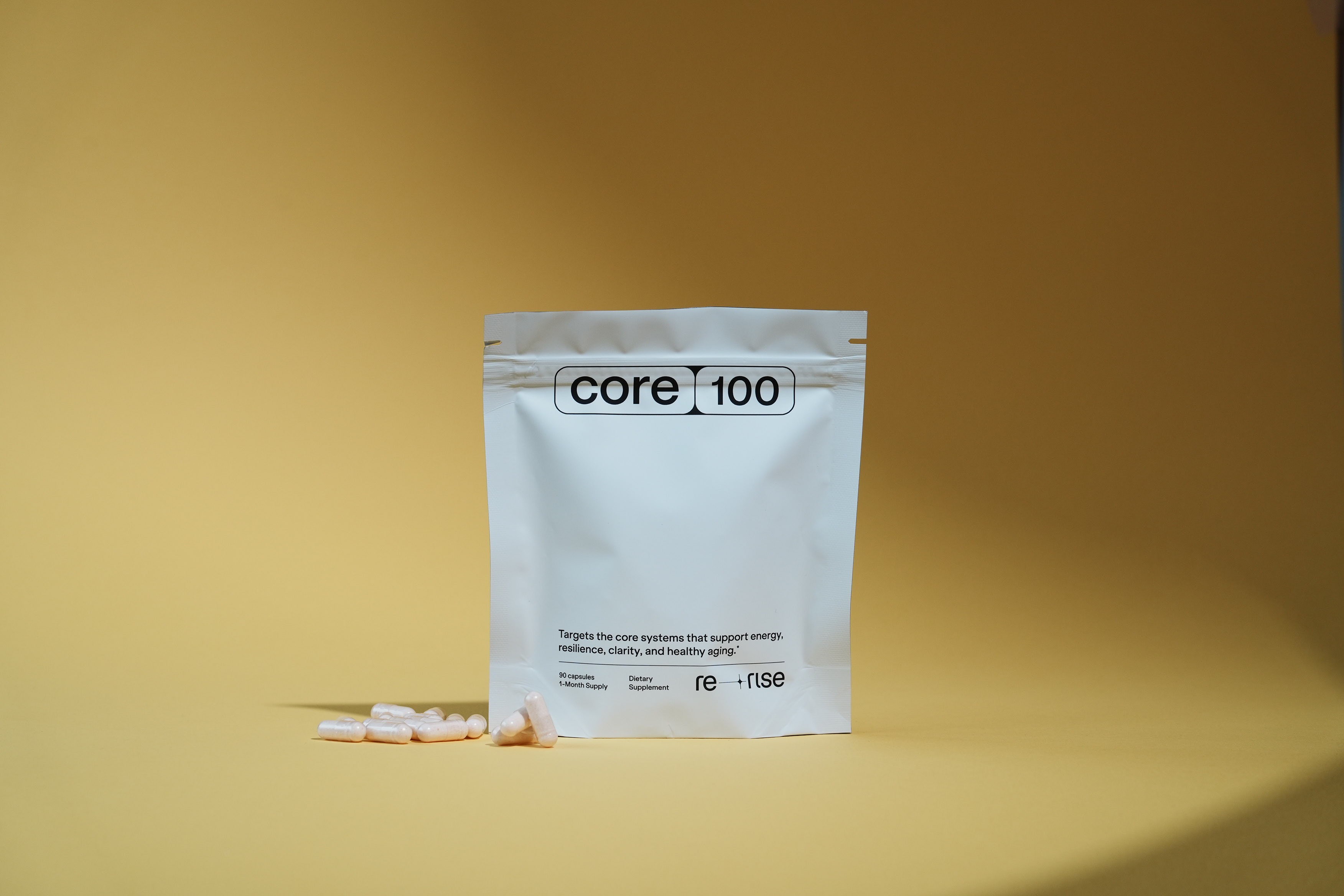
If you're interested in learning more, or want to try Core100 to address this - shoot us a note - hello@rerisehealth.com
Also, you should follow our socials @rerisehealth on all platforms. Life is short - let’s help people, together. Onward!
References for the nerds to check out
[1] Centers for Disease Control and Prevention. (2023). Chronic Diseases in America. CDC.gov.
[2] Nicholls, D. G., & Ferguson, S. J. (2013). Bioenergetics (4th ed.). Academic Press. Link.
[3] Swerdlow, R. H. (2018). Mitochondria and mitochondrial cascades in Alzheimer's disease. Journal of Alzheimer's Disease, 62(3), 1403–1416. PubMed.
[4] Murphy, M. P. (2009). How mitochondria produce reactive oxygen species. Biochemical Journal, 417(1), 1–13. PMC.
[5] Wallace, D. C. (2013). Mitochondrial bioenergetics in health and disease. Genes & Development, 27(9), 897–900. PMC.
[6] Brown, D. A., & Perry, J. B. (2017). Mitochondrial dysfunction in heart disease. Circulation Research, 120(12), 1961–1980. AHA Journals.
[7] Montgomery, M. K., & Turner, N. (2015). Mitochondrial dysfunction and insulin resistance: An update. Endocrine Connections, 4(1), R1–R15. PMC.
[8] Bose, A., & Beal, M. F. (2016). Mitochondrial dysfunction in Parkinson's disease. Journal of Neurochemistry, 139(Suppl 1), 216–231. PubMed.
[9] Picard, M., & McEwen, B. S. (2018). Psychological stress and mitochondria: A conceptual framework. Psychosomatic Medicine, 80(2), 126–140. PMC.
[10] Yoshino, J., Baur, J. A., & Imai, S. (2018). NAD+ intermediates: The biology and therapeutic potential of NMN and NR. Cell Metabolism, 27(3), 513–528. PubMed.
[11] Hernández-Camacho, J. D., Bernier, M., López-Lluch, G., & Navas, P. (2018). Coenzyme Q10 supplementation in aging and disease. Frontiers in Physiology, 9, 44. PMC.
[12] Harris, C. B., Chowanadisai, W., & Mishchuk, D. O. (2013). Pyrroloquinoline quinone (PQQ): Role in mitochondrial biogenesis. Advances in Nutrition, 4(6), 707–710. PMC.
[13] Andreux, P. A., Houtkooper, R. H., & Auwerx, J. (2013). Pharmacological approaches to restore mitochondrial function. Nature Reviews Drug Discovery, 12(6), 465–483. PubMed.

Written by
Conrad Ukropina