2 min
Why You're So Damn Tired
Science
Fact checked by
The Rerise Health Clinical Team

We hear it all the time: why am I so damn tired??
Fatigue is common. Over 45% of Americans report regularly feeling exhausted, yet most attribute it to stress, lack of sleep, or aging [1]. While these factors matter, science suggests a deeper cause at play: mitochondrial dysfunction.
The secret source of energy
Energy isn't simply the outcome of caffeine or sleep. At a cellular level, energy is adenosine triphosphate (ATP), produced by mitochondria, the tiny structures within your cells responsible for converting nutrients into usable energy [2]. Healthy mitochondria produce abundant ATP, helping you feel vibrant, focused, and alert.
Unfortunately, modern life disrupts mitochondria profoundly. Chronic stress, inadequate sleep, poor diet, and exposure to environmental toxins gradually erode mitochondrial function, dramatically reducing ATP production [3].
X-Factor: NAD+ decline
Nicotinamide adenine dinucleotide (NAD+) is critical for mitochondrial energy production. NAD+ helps mitochondria convert food and oxygen into ATP, and it declines sharply with age - by around 50% between ages 20 and 50 [4].
Research confirms that reduced NAD+ impairs mitochondrial efficiency, causing diminished physical and cognitive energy. Studies demonstrate that boosting NAD+ levels in cells significantly restores ATP production, directly improving energy and stamina [5].
Stress is draining your cells
Several daily stressors silently damage your mitochondrial function:
Constant Stress: Chronic psychological stress elevates cortisol, causing oxidative stress and depleting ATP reserves, leaving your cells starved for energy [6].
Poor Sleep: Insufficient or fragmented sleep drastically reduces mitochondrial efficiency, resulting in decreased ATP and impaired cellular repair [7].
Dietary Factors: Diets high in sugar, ultra-processed foods, or lacking essential nutrients like Coenzyme Q10 (CoQ10) or B vitamins directly compromise mitochondrial health and energy output [8].
These lifestyle factors quietly create a state of chronic low energy and impaired cellular function. The key to reclaiming your vitality lies in reversing mitochondrial dysfunction rather than simply masking fatigue with caffeine or stimulants.
Our big time solution: restoring core energy
The science is clear. You can significantly improve your energy by targeting the root cause - mitochondrial dysfunction:
Restore NAD+ Levels: Supplementing with NAD+ precursors such as Nicotinamide Mononucleotide (NMN) substantially boosts ATP production, delivering measurable improvements in physical endurance and mental clarity [9].
Support Nutrient Cofactors: Clinically validated ingredients such as CoQ10, Pyrroloquinoline Quinone (PQQ), and Acetyl-L-Carnitine (ALCAR) replenish mitochondrial cofactors, helping cells efficiently produce consistent energy without crashes [10,11].
Lifestyle Adjustments: Integrating quality sleep routines, regular exercise, and dietary improvements strengthens mitochondrial health, enhancing natural energy reserves [12].
Legitimate energy starts in Your cells
Being tired reflects underlying mitochondrial dysfunction and NAD+ depletion at the cellular level. Rather than relying on temporary fixes like caffeine or energy drinks, true restoration requires addressing mitochondrial health directly.
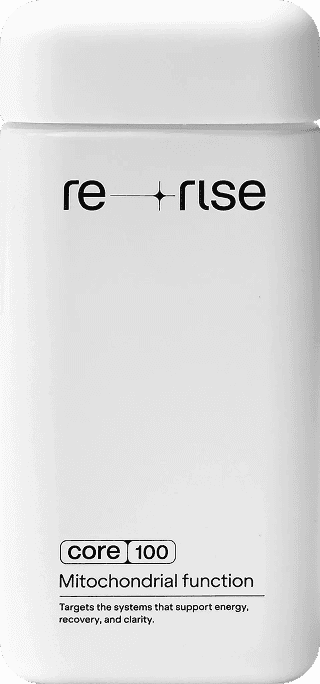
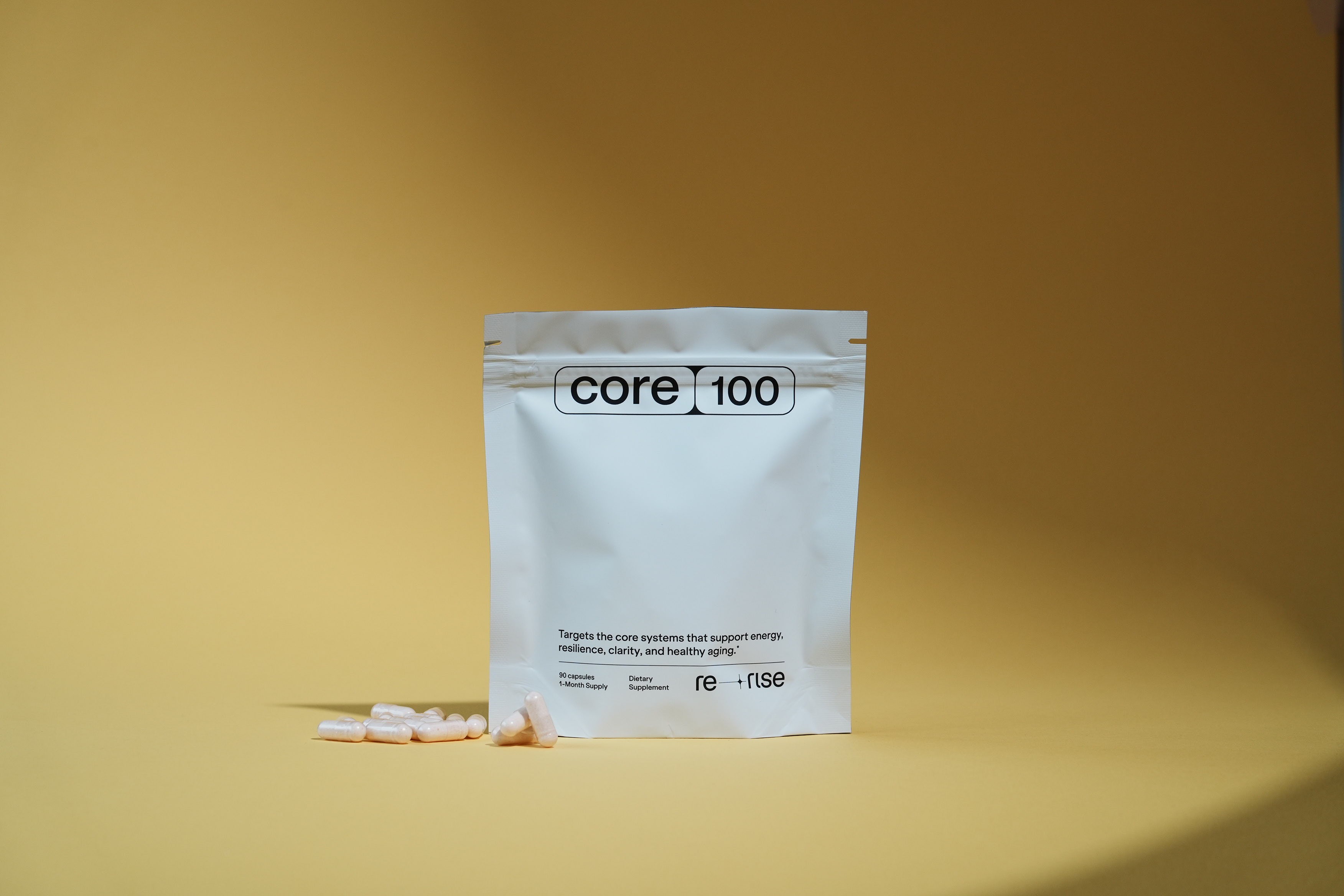
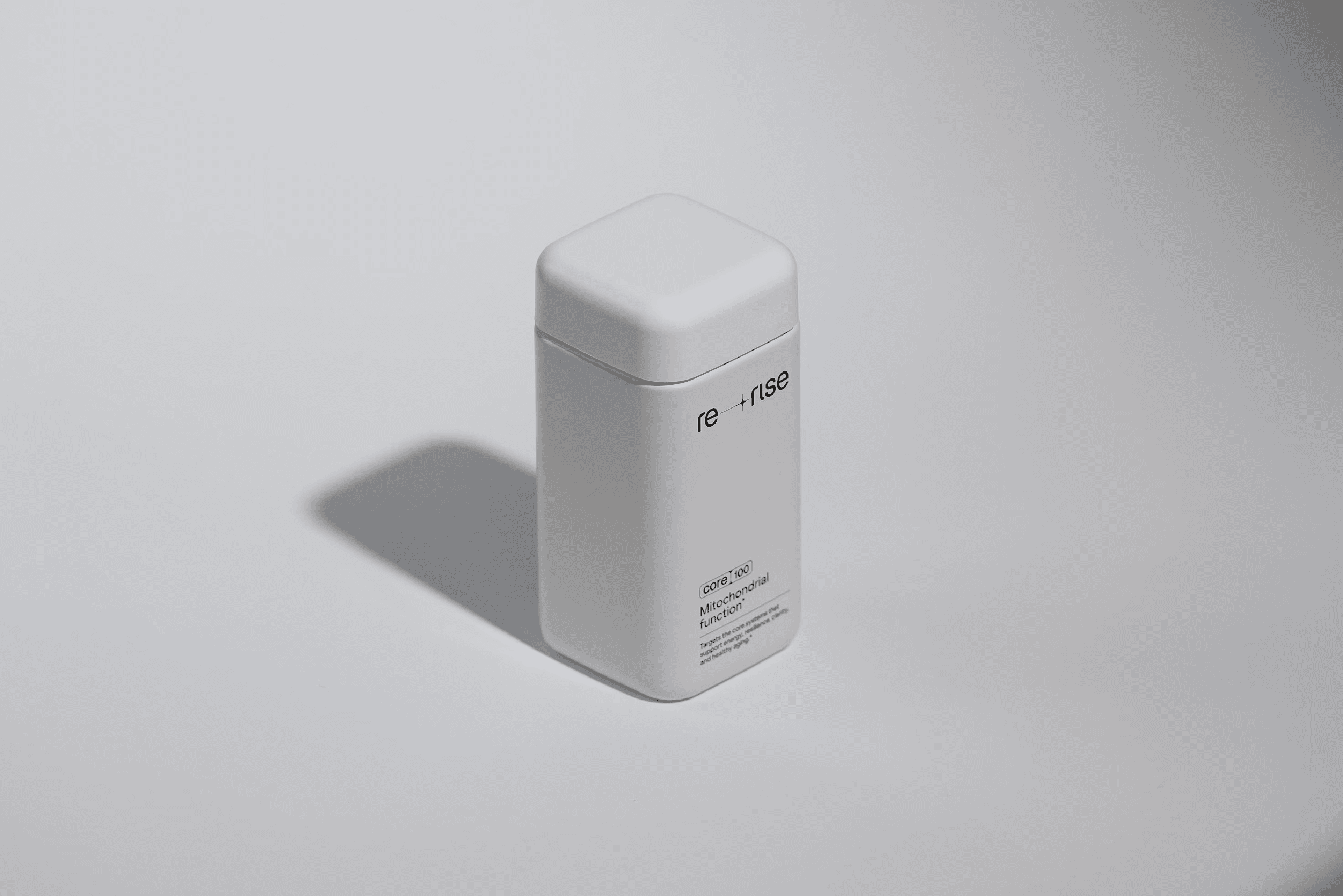
And yes - we have the solution - check out Core100 - you won't regret it.
Interested in learning more or having a conversation about how to restore your cellular energy? Reach out at hello@rerisehealth.com. We love chatting with randos!
References for the skeptics (it's cool we get it)
[1] Centers for Disease Control and Prevention (CDC). (2022). Prevalence of Chronic Fatigue. CDC.gov.
[2] Nicholls, D. G., & Ferguson, S. J. (2013). Bioenergetics (4th ed.). Academic Press. ScienceDirect.
[3] Picard, M., & McEwen, B. S. (2018). Psychological stress and mitochondria: A conceptual framework. Psychosomatic Medicine, 80(2), 126-140. PubMed Central.
[4] Yoshino, J., Baur, J. A., & Imai, S. (2018). NAD+ intermediates: The biology and therapeutic potential of NMN and NR. Cell Metabolism, 27(3), 513-528. PubMed.
[5] Covarrubias, A. J., Perrone, R., Grozio, A., & Verdin, E. (2021). NAD+ metabolism and its roles in cellular processes during ageing. Nature Reviews Molecular Cell Biology, 22(2), 119-141. Nature.
[6] Picard, M., Juster, R. P., & McEwen, B. S. (2014). Mitochondrial allostatic load puts the 'gluc' back in glucocorticoids. Nature Reviews Endocrinology, 10(5), 303-310. Nature.
[7] Chattu, V. K., Manzar, M. D., Kumary, S., Burman, D., Spence, D. W., & Pandi-Perumal, S. R. (2018). The global problem of insufficient sleep and its serious public health implications. Healthcare (Basel), 7(1), 1. PMC.
[8] Montgomery, M. K., & Turner, N. (2015). Mitochondrial dysfunction and insulin resistance: An update. Endocrine Connections, 4(1), R1-R15. PMC.
[9] Mills, K. F., Yoshida, S., Stein, L. R., Grozio, A., Kubota, S., Sasaki, Y., ... & Imai, S. I. (2016). Long-term administration of NMN mitigates age-associated physiological decline in mice. Cell Metabolism, 24(6), 795-806. PubMed.
[10] Hernández-Camacho, J. D., Bernier, M., López-Lluch, G., & Navas, P. (2018). Coenzyme Q10 supplementation in aging and disease. Frontiers in Physiology, 9, 44. PMC.
[11] Harris, C. B., Chowanadisai, W., & Mishchuk, D. O. (2013). Pyrroloquinoline quinone (PQQ): Role in mitochondrial biogenesis. Advances in Nutrition, 4(6), 707-710. PMC.
[12] Hood, D. A., Memme, J. M., Oliveira, A. N., & Triolo, M. (2019). Maintenance of skeletal muscle mitochondria in health, exercise, and aging. Annual Review of Physiology, 81, 19-41.PubMed.

Written by
Conrad Ukropina